The Hacker Who’ll Hit You in 5 Years Is in School
Find Threat Talks on


The hacker who will attack your organization in five years is sitting in a primary school classroom right now.
Nobody is teaching them anything. We spend billions catching criminals and billions defending against them, and almost nothing on the children who will decide which side they end up on.
Tim Murck, Co-founder & Chief Product Officer at HackShield, joins Lieuwe Jan Koning, Co-founder & CTO at ON2IT, to explain how a game changes that equation. HackShield reaches kids aged 7 to 12, the last window where you can still shape behavior, and turns security from a fear lesson into a challenge worth winning.
What you’ll learn
- Fear to curiosity.** Teach kids to ask how an attacker will trick them next.
- Prevention on both sides.** Fewer victims and fewer future perpetrators at once.
- Ban is the wrong lever.** Educate kids to swim, do not empty the pool.
Your cybersecurity experts

Lieuwe Jan Koning
Co-founder & CTO
ON2IT
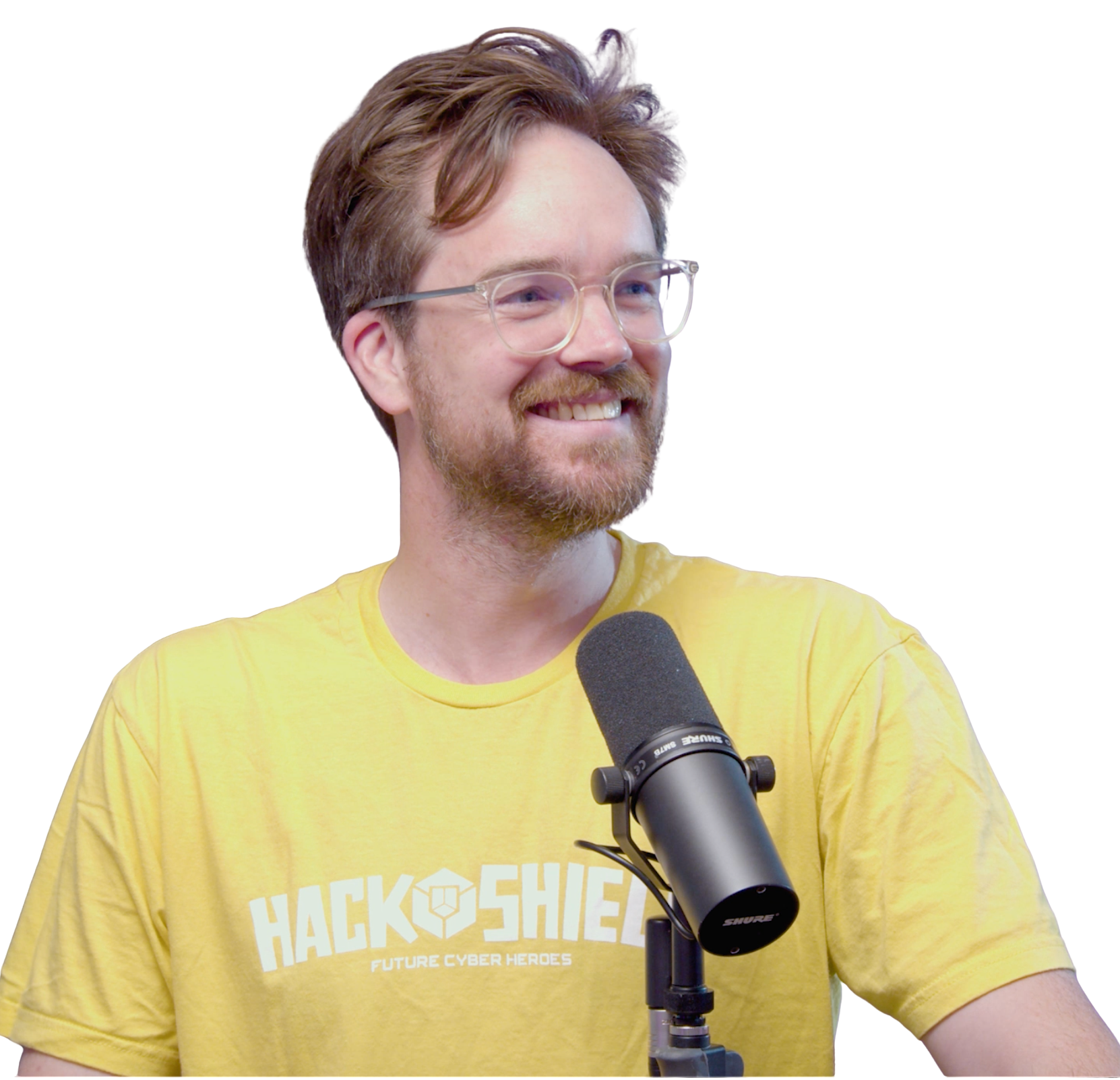
Tim Murck
Co-founder
Hero Centered Design™️ & HackShield
Episode details
HackShield borrows its logic from scouting. Kids earn badges, take on missions, and level up, but the skill being trained is digital survival: spotting a phishing link, questioning a stranger’s free gift, thinking a few steps ahead. Tim calls the underlying method adversarial thinking. Instead of warning kids about a world full of danger, HackShield flips the mindset to a game of anticipation, where the interesting question becomes how are they going to trick me. That reframe works on adults too, and it is the same instinct a strong security culture depends on.
The most pointed argument in the episode is about pace. The school system is deliberately slow, and for reading and arithmetic that is fine. For the digital landscape it is a liability, because criminals do not wait for a new curriculum. That gap is why a private initiative ended up teaching more than half a million Dutch children, and 850,000 worldwide across eight countries, work the formal system was structurally unable to do in time.
The phone-ban debate gets a sharper frame here. Tim’s position is not that screens are harmless. Harmful platforms like certain social media should be blocked. But blocking technology wholesale is throwing a two-year-old into the ocean rather than teaching them to swim in shallow water first. The real question is not whether kids get access, it is which part of the internet we arrange as a safe place for them to make mistakes and learn.
The takeaway for security leaders is direct. Awareness that stops at compliance produces people who tick a box. Awareness that reaches intrinsic motivation produces people who anticipate the attacker. The difference is not the content, it is whether you engage curiosity or just enforce a rule.
Get your Hacker T-shirt
Join the treasure hunt!
Find the code within this episode and receive your own hacker t-shirt for free.
